Hussain Sagar Lake, one of Hyderabad’s most iconic landmarks, is not just a picturesque water body but a historical and cultural symbol of the city. Built during the 16th century, this artificial lake has witnessed Hyderabad’s evolution from a medieval city to a bustling metropolis. Spanning an area of approximately 5.7 square kilometers, Hussain Sagar remains central to the city’s geography, heritage, and daily life.
The Origins of Hussain Sagar
The lake was constructed in 1562 during the reign of Ibrahim Quli Qutb Shah, the ruler of the Golconda Sultanate. It was designed to address the water needs of the city, which faced frequent shortages. Hussain Shah Wali, a revered Sufi saint and engineer, was entrusted with the task of building the lake.
The lake was named after him, reflecting the Qutb Shahi dynasty’s respect for his contributions. It was fed by the Musi River and served as a reservoir to supply water for irrigation and drinking purposes to the twin cities of Hyderabad and Secunderabad.
Engineering and Design
Hussain Sagar was a marvel of medieval engineering. The lake’s bund (dam) was constructed using natural materials, ensuring durability and strength. The tank bund not only acted as a barrier to hold water but also served as a connecting link between Hyderabad and Secunderabad, contributing to the region’s urban planning.
The lake’s storage capacity ensured that the city’s growing population had a stable water supply. It also contributed to agriculture, enabling the cultivation of crops in the surrounding areas.
The Role of Hussain Sagar in Hyderabad’s Development
Over the centuries, Hussain Sagar became more than just a water reservoir. During the Nizam era (18th-20th centuries), the lake gained prominence as a recreational spot. Gardens and promenades were developed along the bund, making it a favored destination for locals and royalty alike.
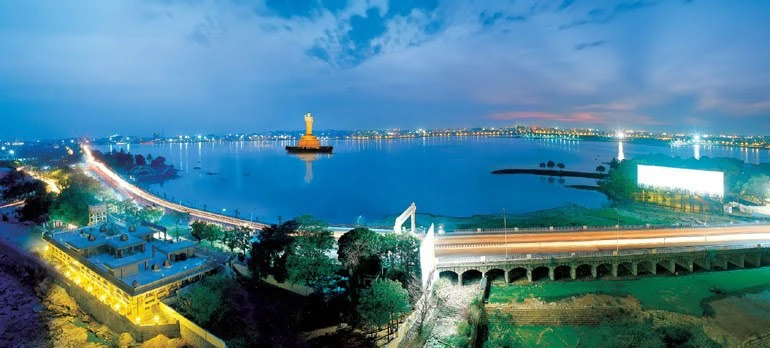
The lake also became a symbol of the city’s unity, physically connecting Hyderabad and Secunderabad. Its location at the city’s center ensured its continued importance as an iconic feature of the urban landscape.
The Installation of the Buddha Statue
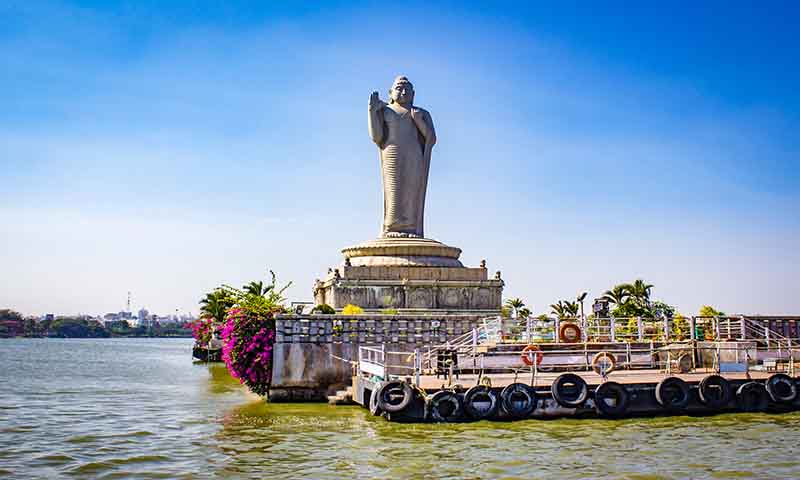
In the 20th century, Hussain Sagar underwent a transformation to become a cultural and spiritual landmark. One of the most significant developments was the installation of the Buddha Statue in 1992.
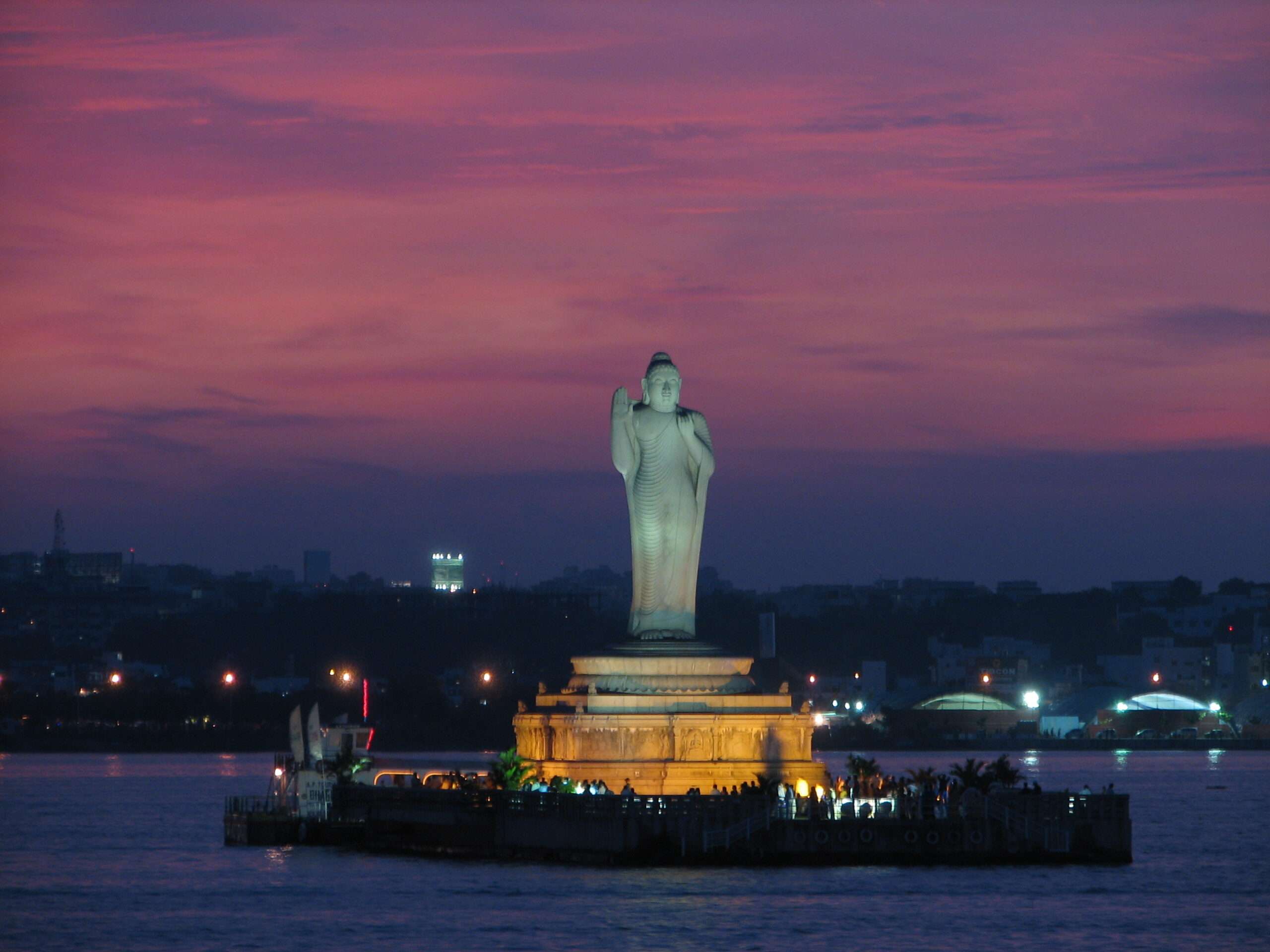
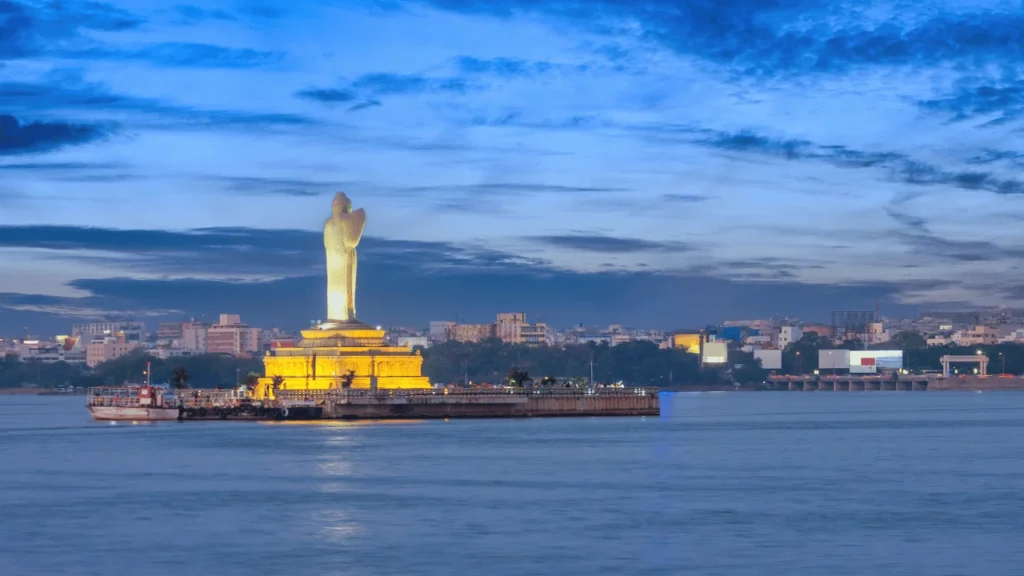
This monolithic statue, standing 18 meters tall and weighing 450 tons, was carved out of a single piece of white granite. It was commissioned by Nandamuri Taraka Rama Rao (NTR), the then Chief Minister of Andhra Pradesh, as a symbol of peace and harmony. The statue is located on Rock of Gibraltar, an island in the middle of the lake, and has become a major tourist attraction.
Pollution and Restoration Efforts
In recent decades, Hussain Sagar faced challenges due to urbanization and industrialization. Untreated sewage and industrial effluents polluted the lake, affecting its water quality and aquatic life. The lake, once a source of drinking water, was rendered unfit even for recreational purposes.
To address these issues, various government and civic initiatives were launched. Efforts to clean the lake, including desilting and treating sewage, are ongoing. Eco-restoration projects have aimed to revive the lake’s ecological balance while preserving its historical and cultural significance.
Hussain Sagar Today
Hussain Sagar remains a focal point of Hyderabad’s identity. Its scenic beauty attracts tourists and locals who visit for boating, leisure walks, and festivals. The Tank Bund Road, adorned with statues of prominent Telugu figures, provides a cultural and historical narrative of the region.
Events like the annual Ganesh Chaturthi immersions are also closely associated with the lake, showcasing its continued relevance in Hyderabad’s cultural fabric.
Conclusion
Hussain Sagar Lake is more than just a water reservoir—it is a testament to Hyderabad’s historical ingenuity, cultural vibrancy, and resilience. From its origins as a lifeline for the city to its current role as a hub for tourism and cultural events, Hussain Sagar embodies the spirit of Hyderabad. Preserving this lake for future generations is not just an environmental necessity but a way to honor the legacy of those who built and cherished it.